
Open Question #6OpenSeeking contributors
How can medical imaging intelligence be developed and validated responsibly?
How should imaging AI systems be designed and evidenced without claiming clinical diagnostic authority they do not hold?
WG002 · Research operating unit
Explore how medical imaging, multimodal AI, and knowledge systems can become explainable intelligence workflows for research and clinical environments.
Working Group WG002
You are here in the ATRISI system
Imaging Intelligence is an operating unit under Research & Evidence. Working Group WG002 is operational metadata.
Charter
Can multimodal intelligence systems transform unstructured imaging data into explainable, knowledge-grounded institutional workflows?
Active applied research working group producing prototypes, working notes, and pilot evidence around imaging knowledge platforms.
Open Questions
The smallest unit of the Research Network is not membership — it is an open research question.
How should imaging AI systems be designed and evidenced without claiming clinical diagnostic authority they do not hold?
Which explainability and workflow evidence patterns generalize across institutions without claiming diagnostic authority?
Publication sequence
Working notes, frameworks, and pilot reports follow a durable code so the research operation stays legible before a larger CMS exists.
Working note on imaging data, multimodal AI, and knowledge systems for research and discovery.
Source material
Initiatives
An applied research initiative exploring how medical imaging, multimodal AI, and knowledge systems can be combined to create explainable intelligence workflows for research and clinical environments.
Can multimodal intelligence systems transform unstructured visual data into explainable, knowledge-grounded intelligence?
Evidence from an applied imaging intelligence prototype — exploring DICOM workflows, multimodal reasoning, explainability, and knowledge-grounded assessment. For research and learning contexts; not a regulated clinical device.
Research evidence
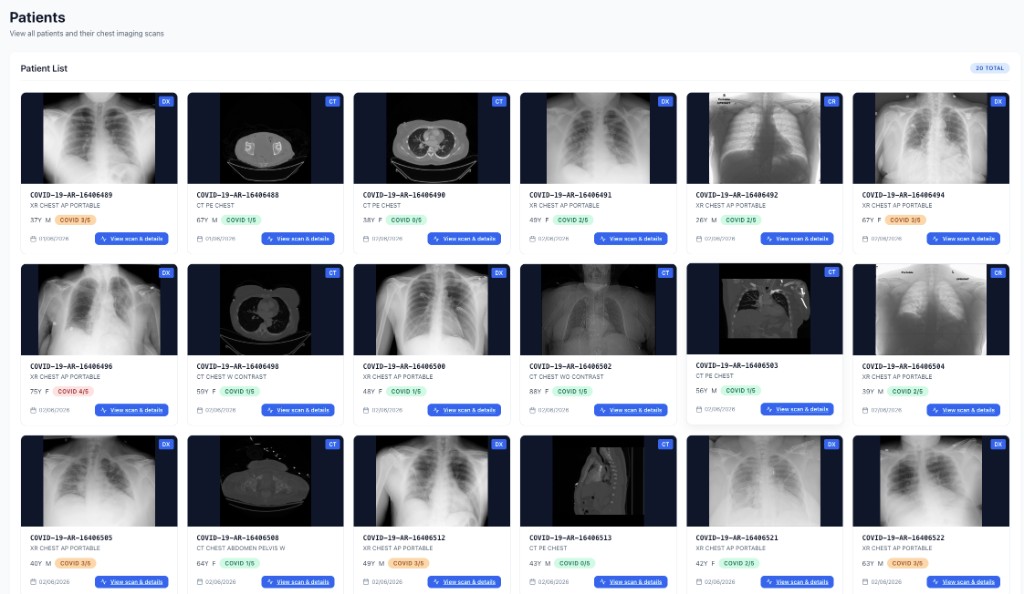
Research prototype for organizing multimodal imaging studies — DICOM ingestion, modality tagging, and cohort navigation for applied exploration.
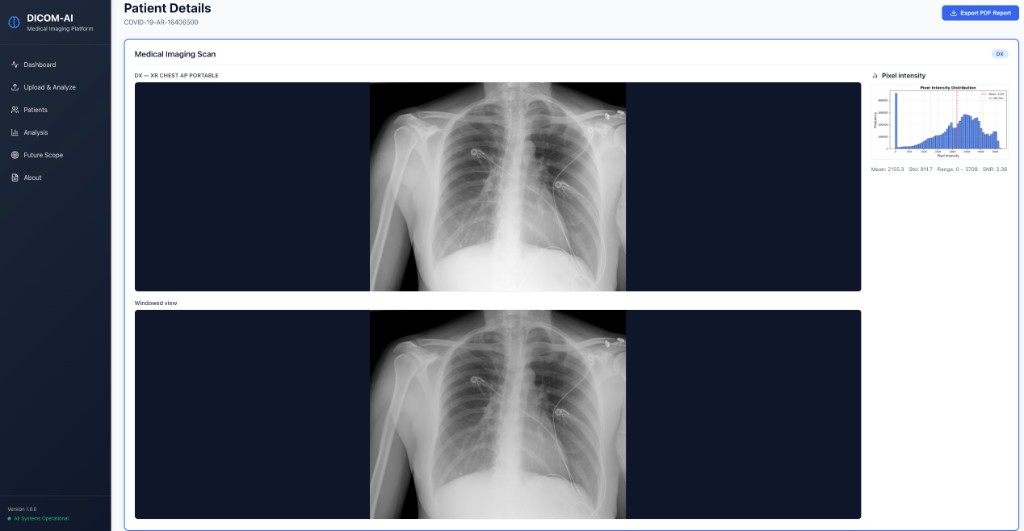
DX chest workflow with windowed views and pixel-intensity analytics — evidence for how unstructured visual data becomes quantitative signals.
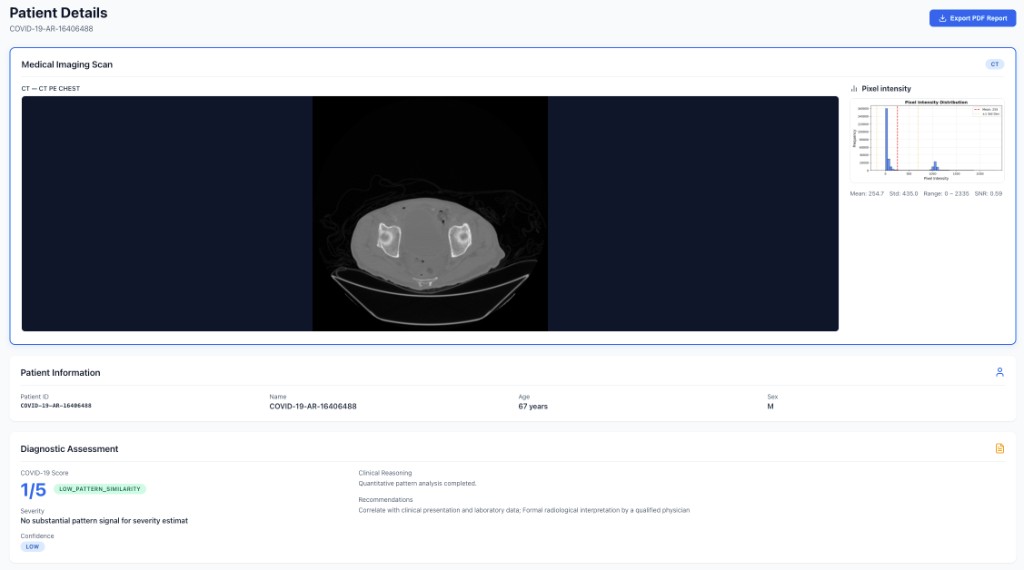
CT study with pattern-similarity scoring, confidence labeling, and structured clinical reasoning — human-in-the-loop decision support research.
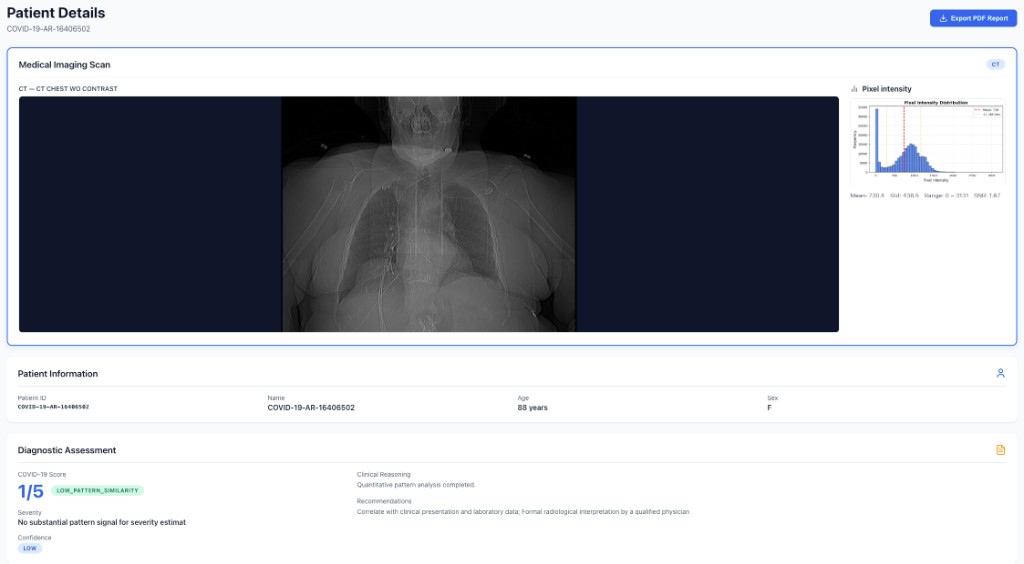
End-to-end imaging intelligence flow — quantitative analysis, severity signals, recommendations, and exportable research briefs.
Related frameworks
Collaborate
Join WG002 to critique the agenda, co-author the next note, contribute source material, or host a validation pilot. Evidence from implementation feeds the public Impact surface.